Transforming a house into a warm cocoon relies on concrete choices: materials, light sources, and the arrangement of living areas. The cocooning decor in 2026 moves away from cold minimalism to favor enveloping interiors with rich textures and deep hues. Here are ten specific ideas to create this ambiance in your home.
1. Layer lighting for an enveloping glow
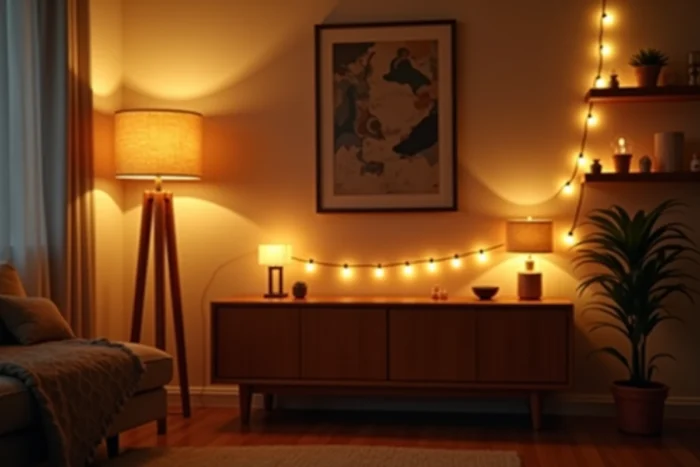
A single ceiling light produces flat lighting that kills any cozy atmosphere. The principle of layered lighting involves combining three levels: soft general lighting, task lamps at sitting height, and ambient light (string lights, LED candles, light strips).
Opt for warm color temperature bulbs and install dimmers on your main fixtures. This way, you can adjust the intensity according to the time of day, from morning to evening.
Other inspirations for arranging each room are gathered on Niddou’s home page, with complementary approaches to those detailed here.
2. Create a dedicated reading nook with a cozy armchair
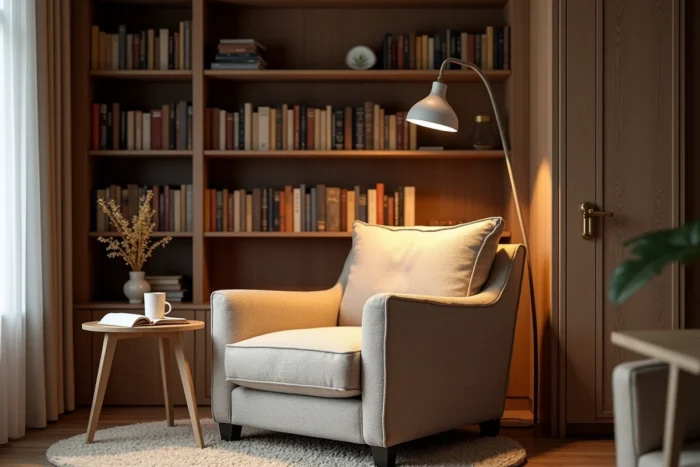
Have you noticed that a simple armchair placed in a corner with a reading lamp changes the atmosphere of a room? Structuring the home into distinct zones is an ambiance lever that is gaining traction in modern interiors.
A deep armchair, a blanket within reach, and a small side table for a cup: this reading nook doesn’t need much space. The corner of a living room or a nook under a staircase is sufficient.
3. Focus on velvet for seating and cushions
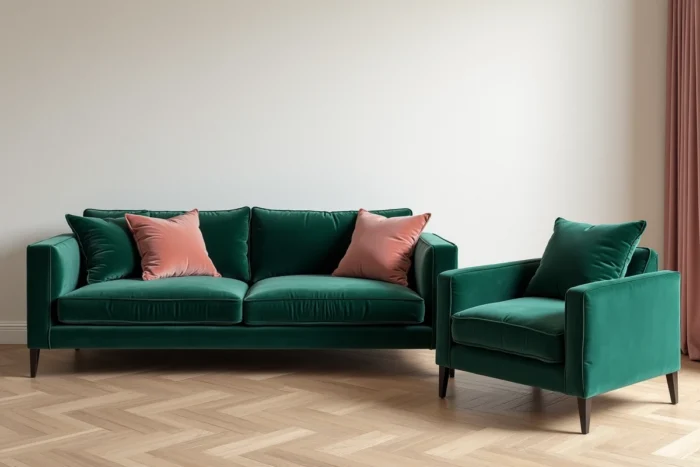
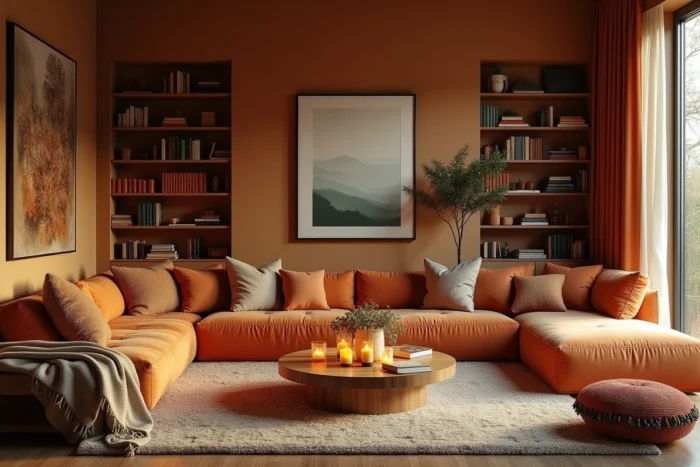
Velvet provides an immediate tactile and visual presence. On a sofa, cushions, or even a pouf, this material captures light and creates subtle reflections that warm up the room.
Choose deep shades (terracotta, forest green, midnight blue) rather than overly light colors that show wear quickly. Dark velvet absorbs light and enhances the cocoon effect, especially when combined with soft lighting.
4. Incorporate raw or aged wood into furniture
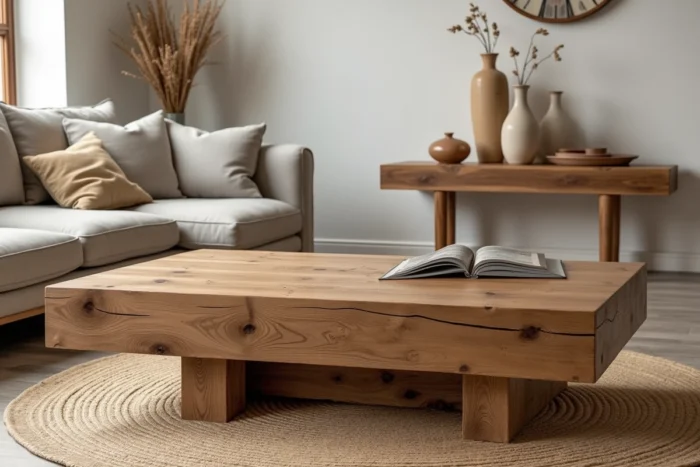
Wood remains the most straightforward material to warm up an interior. A solid oak coffee table, aged wood shelves, or a raw pine wall panel add an organic texture that metal or glass cannot replicate.
The trick: don’t make everything uniform. Mix a light wood piece with a dark wood item. This contrast avoids a chalet effect and anchors the decor in a contemporary style.
5. Adopt a palette of warm and enveloping colors
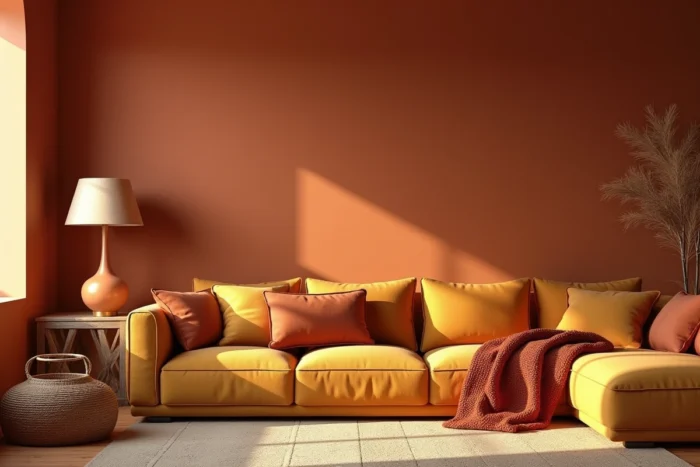
The 2026 trend leans towards richer palettes than the ubiquitous off-white of previous years. Think earthy tones: ochre, brick, camel, warm brown. These colors work well as a solid color on an accent wall or in small touches on textiles.
To avoid a dark effect in a small room, apply the strong shade to just one wall and keep the other surfaces in a light neutral tone. An accent wall in a warm hue is enough to transform the ambiance of a living room or bedroom.
6. Multiply textiles with strong sensory presence
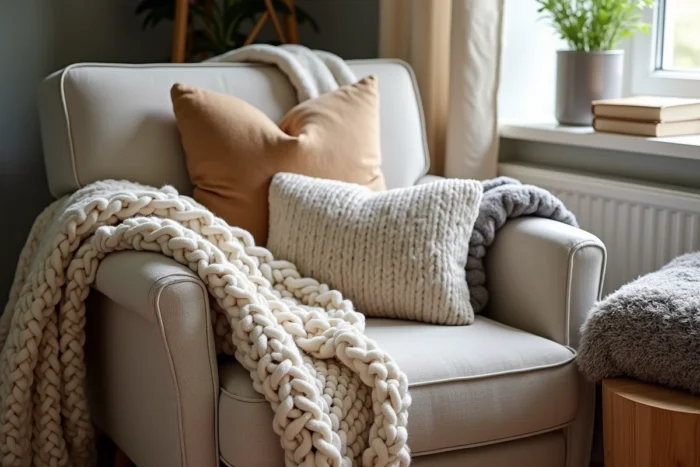
A cocooning interior is as much about touch as it is about sight. Thick wool blankets, crumpled linen cushions, long-pile rugs underfoot: each textile adds a sensory layer.
Here are some guidelines to balance without overloading:
- Limit yourself to three different textile materials per room (for example, wool, linen, velvet)
- Vary the sizes of cushions rather than accumulating identical ones
- Use one large blanket instead of several small throws that create visual clutter
7. Use scented candles for the olfactory dimension
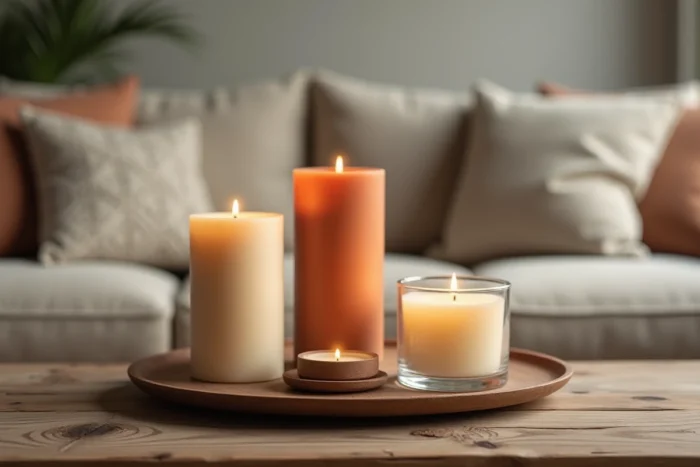
Sensory decoration is not limited to the visual. Scented candles provide both lively light and a pleasant aroma. Sandalwood, vanilla, fig: choose one olfactory family and stick to it to avoid unpleasant mixtures.
One to two candles per room are enough to scent without overwhelming. Place them at a height (shelf, fireplace) so that the heat better disperses the fragrance.
8. Install a thick rug to anchor the living room
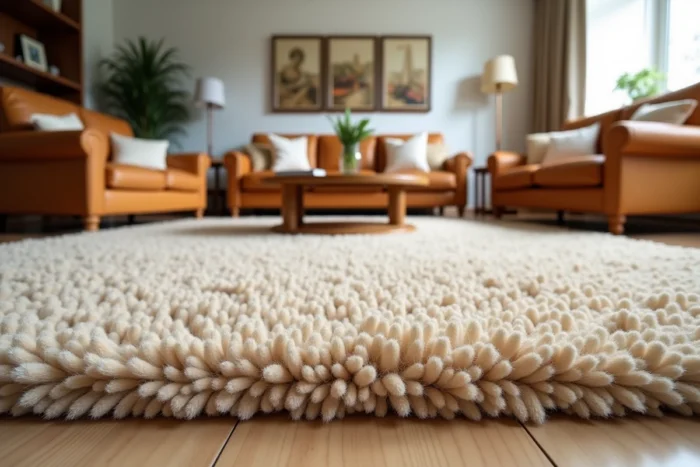
A rug visually delineates the living space and absorbs sound. Choose one that is large enough to fit under the front feet of the sofa: this gives a sense of a defined and comfortable area.
In terms of material, a wool or woven jute rug adds warmth without overwhelming the room. Avoid overly thin models that slide and provide no comfort underfoot.
9. Air out and open windows as a cocooning ritual

This may seem paradoxical in an article about cocooning, but daily airing is part of the cocooning comfort. Renewed air each morning prevents the atmosphere from becoming heavy, especially in rooms filled with textiles and candles.
Pair this gesture with light linen curtains that filter natural light while allowing air to circulate. Daylight remains the primary factor for well-being in a room, even the coziest.
10. Apply the three-material rule to avoid an overloaded effect
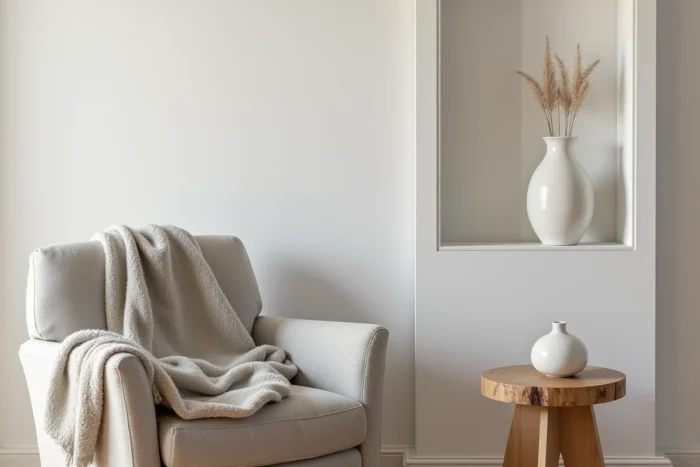
A common pitfall in cocooning decor: accumulating materials and objects until the room feels suffocating. A practical rule is to limit each area to three dominant materials. For example: wood, wool, and ceramics for the living corner, or linen, rattan, and matte metal for the bedroom.
This framework prevents impulsive purchases from distorting the whole. Before adding a new item, ask yourself: does it fit into my three materials or does it create a fourth?
Every room in the house can become a cocoon without heavy investment. The common thread remains the coherence between the chosen materials, the quality of light, and the attention paid to tactile and olfactory sensations. A warm interior is built layer by layer, not by accumulation.