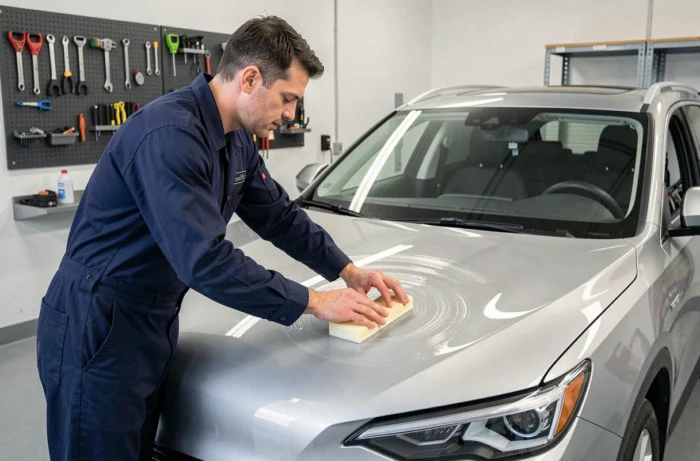
The automotive customization market is evolving rapidly, driven by more efficient materials and a clearer regulatory framework. Preventive maintenance, wrapping, protective film: options are multiplying, but their costs, legal constraints, and durability vary widely. Comparing these parameters allows for a choice without unpleasant surprises.
PPF Protective Film, Vinyl Wrapping, and Custom Paint: Comparison of Customization Options
Three solutions dominate the market for altering a vehicle’s appearance or protecting its bodywork. Their technical characteristics, lifespan, and administrative implications differ significantly.
| Criterion | Protective Film (PPF) | Full Vinyl Wrapping | Custom Paint |
|---|---|---|---|
| Main Function | Protection against impacts, gravel, UV | Color change and light protection | Permanent color change |
| Estimated Durability | Several years depending on installation quality | Several years, sensitive to prolonged UV exposure | Vehicle lifespan with regular maintenance |
| Reversibility | Removal without damage to healthy paint | Removal possible by a professional | Irreversible |
| Registration Certificate Update | Not required (color unchanged) | Mandatory if the dominant color changes | Mandatory |
| Available Finishes | Glossy or satin transparent | Matte, satin, glossy, textured | Any color, special effects |
PPF stands out for its protective purpose. According to Cover Custom, the protective film applied even before the vehicle delivery is becoming a reflex, particularly on Tesla Model 3 and Model Y, which represent the majority of their wrapping projects in 2026. This immediate protection practice particularly concerns electric vehicles whose factory paint is known to be thin.
Car enthusiasts looking to delve deeper into these topics can find specialized resources on otopassion.fr, covering both routine maintenance and more ambitious customization projects.
Full vinyl wrapping, on the other hand, appeals due to its reversibility. Matte finish currently dominates full projects, while glossy remains limited to partial applications such as stripes, accents, or de-chroming.
Full Wrapping and Registration Certificate: A Legal Obligation Often Ignored
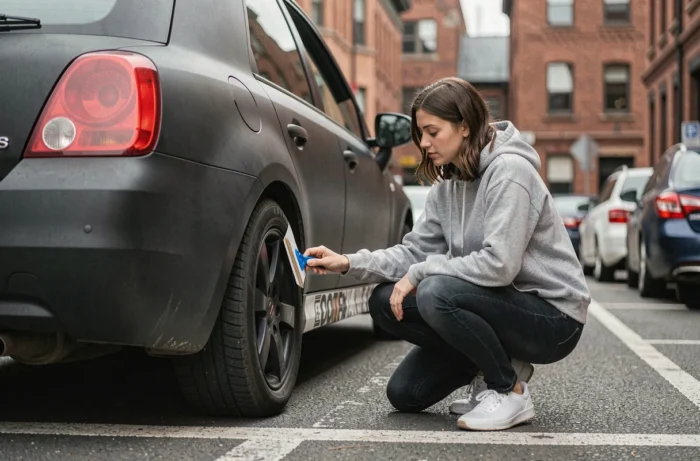
A white vehicle covered with a matte black film no longer displays the same dominant color as that recorded on its registration certificate. This situation, common in wrapping workshops, poses a specific administrative problem.
A full wrap changing the dominant color must be declared to the ANTS and requires an update of the registration certificate. Failure to comply with this obligation exposes one to a fine for non-compliance with registration information.
In contrast, partial wrappings (roof, hood, decorative stripes) do not require any steps as long as the dominant color remains the same as that on the certificate. The distinction thus relies on the proportion of covered surface and the overall visual perception of the vehicle.
Body Kits and Bodywork Kits: The RTI Procedure to Know
Modifications affecting the dimensions or structure of the vehicle fall under a different framework. Any significant transformation altering the width, height, or original safety elements requires a single approval (RTI) validated by the DREAL.
Without this approval, the vehicle may be refused at the technical inspection. Aftermarket body kits, popular on sporty compacts, often fall into this category when they modify the overhangs or air intake openings.
- A modified bumper that exceeds the original dimensions requires an RTI, even if the kit is sold freely
- Wheel wideners that increase the overall width of the vehicle are subject to the same procedure
- Engine reprogramming, often coupled with these modifications, carries risks of exclusion from manufacturer warranty and denial of compensation by the insurer
This overlap of constraints explains why many ambitious customization projects go through professionals capable of managing both installation and homologation procedures.
Automotive Maintenance and Protective Products: What Changes with Electric Vehicles
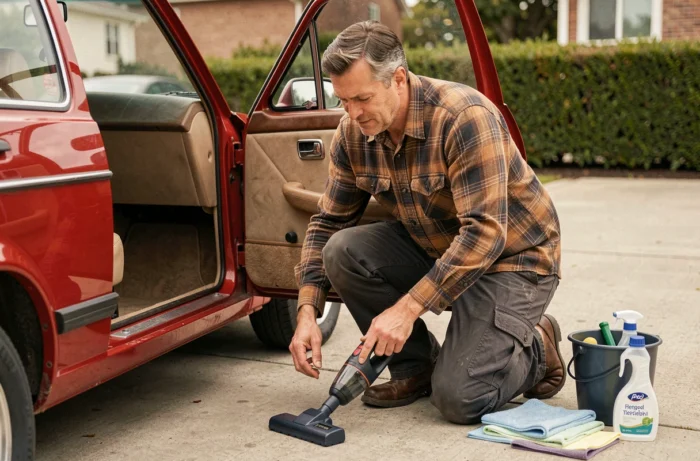
The maintenance of an electric vehicle does not follow the same schedule as that of a thermal model. The absence of engine oil changes, oil filters, and exhaust reduces the frequency of visits to the workshop. However, the bodywork and running gear remain subject to the same external aggressions.
Hydrophobic and oleophobic paints are gaining ground in this segment. Applied in addition to a PPF or directly on the factory paint, they facilitate cleaning by preventing dirt and road residues from adhering. For a vehicle parked outdoors, this type of treatment significantly reduces the frequency of washing.
Cleaning Products: Adapting the Protocol to the Coating
A vehicle covered with matte vinyl film does not clean like a classic glossy paint. Traditional waxes, designed to shine, alter the matte finish by creating uneven shiny areas.
Cleaning products must be compatible with the type of coating applied. Vinyl film manufacturers recommend neutral pH shampoos, free of aggressive solvents. For PPF, cleaning with lukewarm water is sufficient in most cases, supplemented by a ceramic treatment every year to maintain the water-repellent effect.
Self-cleaning materials, still marginal, are beginning to appear in next-generation automotive coatings. Their principle relies on surface nanostructures that prevent particles from sticking, a function inspired by the lotus effect observed on certain plant leaves.
Engine Reprogramming and Insurance: A Costly Blind Spot
Engine reprogramming (stage 1 or higher) increases power beyond the original specifications. This modification, popular among performance enthusiasts, carries a financial risk rarely measured at the time of purchasing the module or service.
A reprogrammed car whose actual power exceeds that declared on the registration certificate operates in a state of non-compliance. In the event of a claim, the insurer may refuse compensation if the modification has not been declared. The insurance contract covers a vehicle compliant with its recorded characteristics, not a vehicle modified without declaration.
The manufacturer warranty follows the same logic. An engine whose ECU has been reprogrammed falls outside the warranty perimeter, even for failures with no direct link to the reprogramming, as soon as the manufacturer detects the intervention.
Customizing a vehicle remains accessible to all budgets, from a simple wheel change to full wrapping. The difference between a successful project and an administrative issue often lies in a prior verification: vehicle compliance, declaration to the ANTS, compatibility with the insurance contract. These administrative steps, less appealing than a color chart, condition long-term peace of mind.