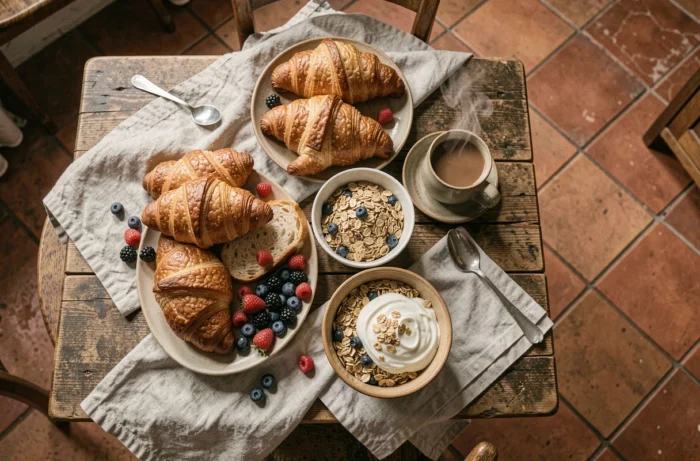
The indulgent breakfast as we know it, with buttered toast and a bowl of cereal, is losing ground. According to a 2026 analysis by Innova Market Insights, nearly one in three Europeans reports snacking more often than before, and breakfast is among the meals most affected by this fragmentation. France is one of the markets where morning snacking is growing the fastest. This observation redefines what “starting the day right” means in the kitchen.
On-the-go breakfast or sit-down breakfast: two coexisting logics
Online content mainly offers recipes designed for a seated meal taken at home. Banana pancakes, bowls of porridge topped with fresh fruit, and avocado toast assume a preparation time and a plate set on a table.
Recent data tells a different story. Among Millennials and Gen Z, the structured morning meal often gives way to protein snacks, homemade bars, or grab-and-go drinks. The two approaches do not oppose each other; they cater to different mornings.
A free Sunday calls for crunchy homemade granola, thick pancakes, or a carefully composed smoothie. A rushed Monday demands an overnight oat muffin prepared the night before or a chia seed pudding taken out of the refrigerator. Thinking about indulgent breakfasts throughout the week means alternating between these two registers, and the resources offered by Matin Gourmand illustrate this diversity of formats well.
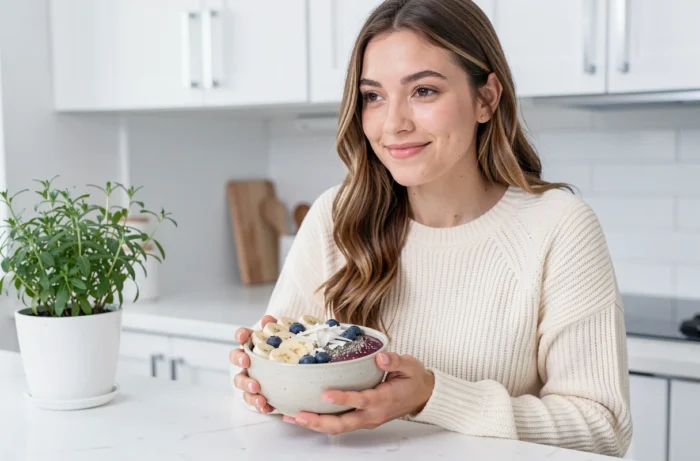
Porridge, chia, granola: three basics to master for varied mornings
Rather than multiplying recipes, three basic preparations cover almost all the trendy indulgent breakfasts. Each can be endlessly varied according to the seasons and tastes.
Oatmeal porridge
Oats cooked in milk (dairy or plant-based) create a creamy base in under five minutes. Porridge can accommodate both sweet toppings (mashed banana, dark chocolate chips, honey) and protein-rich toppings like a spoonful of almond butter or pumpkin seeds.
A well-topped porridge replaces a complete breakfast without requiring elaborate cooking. The key is not to drown the oats: a ratio of about one volume of oats to two volumes of liquid gives the best texture.
Chia seed pudding
Prepared the night before, chia pudding is the ultimate on-the-go format. Mix the seeds with milk, add a bit of vanilla or cocoa, and the refrigerator does the work overnight. In the morning, just add fresh fruit.
Chia seeds absorb several times their weight in liquid, giving a texture similar to tapioca. A glass jar is easy to transport, making it a great ally for busy mornings.
Homemade granola
Store-bought granola often contains a lot of added sugar. A homemade version, made with oats, honey, coconut oil, and dried fruits, allows for control over each ingredient. A batch baked in the oven lasts all week.
- Oats, sliced almonds, sunflower seeds: the dry base that provides crunch
- Honey or maple syrup in moderate amounts: just enough to bind and brown without turning the granola into candy
- Dark chocolate chips added after baking: they melt on the warm bowl without burning in the oven
- Dried fruits (cranberries, apricots, raisins) added once the granola has cooled to maintain their softness
Pancake and indulgent toast recipes: beyond classic versions
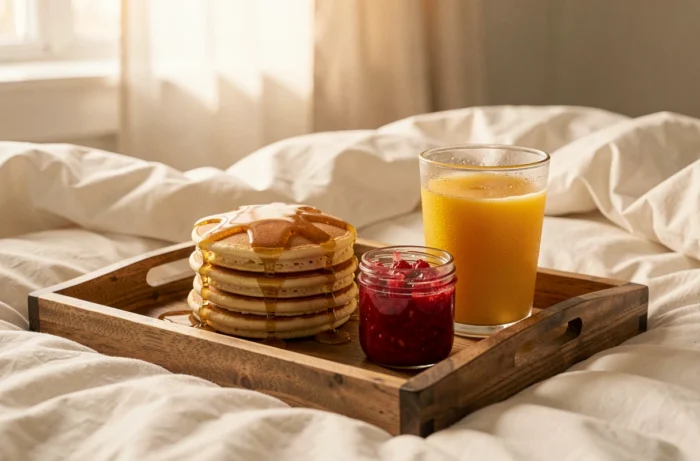
Banana pancakes appear in almost all competing articles. The basic recipe, two eggs and one mashed banana, works. But it produces flat and fragile pancakes if not supplemented.
Adding two to three tablespoons of ground oats gives the batter structure. A ten-minute rest before cooking significantly improves the texture, as the oats absorb the moisture from the banana. For a result that is fluffy inside and golden outside, the pan should be on medium-low heat, not high.
For toast, whole grain sourdough bread holds up better under heavy toppings than industrial white bread. Here are some ideas that go beyond butter and jam:
- Whipped ricotta, fresh figs, and a drizzle of honey: the creamy-sweet contrast works well in both summer and autumn
- Peanut butter, banana slices, and raw cacao nibs: an American classic that provides plant-based protein
- Fresh cheese, smoked salmon, and sesame seeds: a savory option often overlooked in French articles about breakfast
Morning smoothie: mistakes that make it less filling
The smoothie is perceived as a healthy and quick breakfast. In practice, a smoothie made solely of fruits and juice gives a quick sugar spike followed by a mid-morning craving.
A filling smoothie contains a source of protein and fiber, not just fruits. Adding Greek yogurt, a handful of raw oats, or a spoonful of hemp seeds transforms a sweet drink into a liquid meal that lasts until noon.
The choice of liquid also matters. Boxed fruit juices, long associated with the French breakfast, have been declining for several years in favor of fresh water or plant milk. Replacing juice with almond or oat milk reduces the sugar load without sacrificing the creaminess of the smoothie.
One last point rarely mentioned: temperature. A smoothie that is too icy can cause digestive discomfort on an empty stomach. Taking the fruits out of the freezer five minutes before blending is enough to achieve a cold texture that is not harsh on the stomach.
The most sustainable indulgent breakfasts in a routine are not the most spectacular. They are the ones that can be partially prepared the night before, adapted based on what’s left in the refrigerator, and eaten standing up on a Tuesday or sitting down on a Saturday. Three or four well-established bases are worth more than a notebook of fifty recipes never made again.