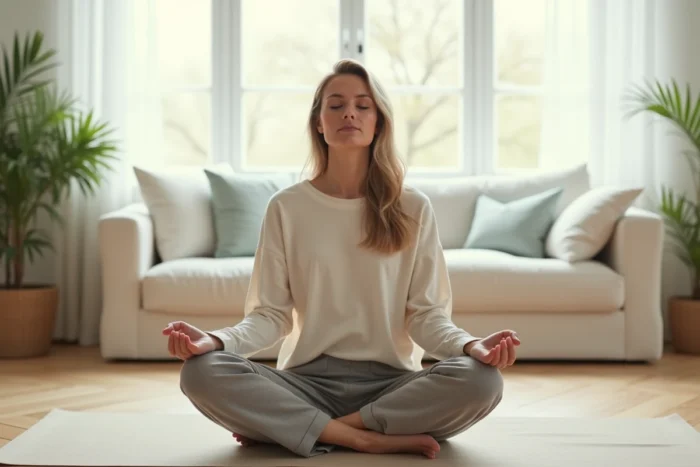
Relaxation encompasses a set of physical and mental practices aimed at reducing the activity of the sympathetic nervous system, which triggers stress reactions. In cognitive-behavioral therapy, three techniques have demonstrated their effectiveness in controlled studies: progressive muscle relaxation, breathing exercises, and mental imagery. These three approaches form the foundation of most protocols used in clinical psychology to treat anxiety and stress-related disorders.
Progressive Muscle Relaxation: What Research in CBT Validates
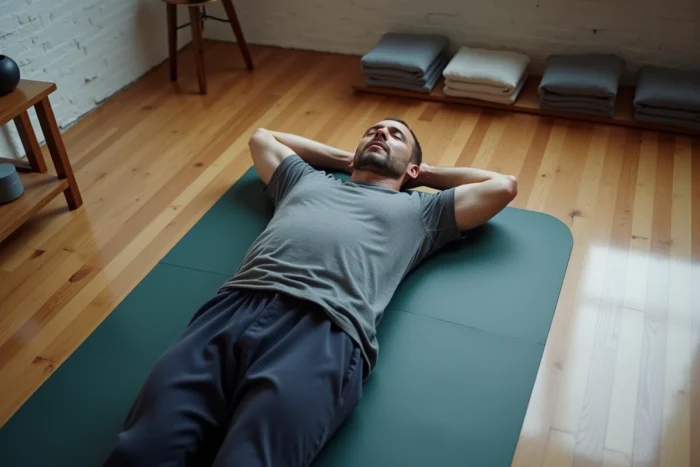
Progressive muscle relaxation is based on a simple principle: voluntarily contract a muscle group for a few seconds, then release the tension. The brain records the contrast between contraction and relaxation, leading to a deeper release than passive rest.
This technique is among the validated tools in cognitive-behavioral therapy for managing anxiety. Its effectiveness relies on the body’s ability to lower stress hormone production when the muscles stop sending tension signals to the nervous system. CBT resources classify it, along with breathing exercises and mental imagery, among the techniques proven effective in controlled studies.
To get started, simply work through five muscle groups (hands, shoulders, face, abdomen, feet) in sequence, over a duration of ten to fifteen minutes. No equipment is necessary for learning. Wikirelax details several beginner-friendly variations for those looking to structure their first sessions.
3-6-5 Heart Coherence Protocol: Beyond Occasional Anti-Stress Exercise
Heart coherence refers to a structured breathing practice aimed at synchronizing the heart rate to a regular cycle. Mental health and sports health resources now present it as a lever for preventing underlying anxiety and burnout, not just as a tool for occasional management.
The so-called “3-6-5” protocol structures this practice: three sessions per day, six breaths per minute (five seconds inhaling, five seconds exhaling), for five minutes. This precise breathing rhythm affects the autonomic nervous system by promoting balance between activation and recovery.
What the Protocol Requires in Practice
Three daily sessions represent a real constraint. The first, upon waking, is easily integrated. The second, in the middle of the day, requires isolating oneself for a few minutes in a professional or family environment, which is not always possible. The third, at the end of the day, prepares the body for sleep.
Feedback varies on this point: some people notice a significant effect on their tension levels after a week of regular practice, while others do not perceive any change until three to four weeks. Consistency seems to weigh more heavily than the duration of each session.
- Nasal inhalation for five seconds, oral exhalation for five seconds, without forcing the volume of air
- Sitting upright, feet flat, hands resting on thighs to limit bodily distractions
- Possible use of a sound guidance app in the first weeks, then transitioning to independent practice
Mental Imagery and Visualization: An Underestimated Technique for Deep Relaxation
Mental imagery involves picturing a scene, place, or sensation with enough sensory detail for the brain to react as if it were a real situation. In relaxation, this technique exploits a documented neurological mechanism: the brain does not fully distinguish a vivid mental image from a real sensory perception.
Visualization is integrated into CBT protocols alongside muscle relaxation and breathing. It affects the mind through a different pathway. While breathing directly alters the physiological state and muscle relaxation addresses bodily tensions, visualization operates at the cognitive level by diverting attention from anxiety-provoking thoughts.
Building an Effective Visualization
A common mistake is attempting to visualize an entire landscape. Protocols recommend focusing on one sensory channel at a time: the warmth of the sun on the skin, the sound of flowing water, the texture of a fabric. Gradually adding other senses over multiple sessions makes the practice more accessible than trying to find a “perfect image” from the start.
The duration of these sessions varies among practitioners and protocols. CBT practitioners agree that short (five to ten minutes) and frequent sessions yield better results than a long weekly session.

Starting Relaxation: Mistakes That Hinder Progress
Most articles on relaxation list techniques without addressing why so many people give up after a few days. Three recurring obstacles emerge.
- Expecting immediate and spectacular results: relaxation is not a fast-acting medication. The first sessions may even generate discomfort, as paying attention to the body reveals previously ignored tensions.
- Multiplying methods without deepening any: testing meditation on Monday, heart coherence on Tuesday, and yoga on Wednesday prevents the body from establishing a routine. Sticking to one technique for at least two weeks allows for a better assessment of its real effect.
- Practicing only in high-stress situations: relaxation works better as a regular preventive practice than as an emergency response. Learning is easier in a relatively calm state.
Muscle relaxation, heart coherence, and mental imagery share a common point: they require active learning, not just rest. Choosing one of these three methods and practicing it daily for three weeks remains the most reliable strategy to observe a tangible change in tension and anxiety levels.