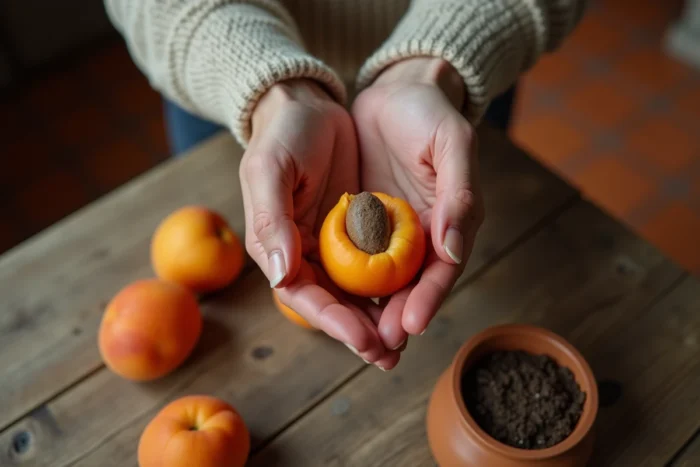
An apricot pit contains an almond (the seed) protected by a woody shell. To germinate, this seed needs to undergo a period of cold and moisture that breaks its dormancy, a process called stratification. Without this step, the pit can remain inert in the soil for months, or may never germinate.
Cross-Pollination and Genetic Variability of Apricot Seedlings
Competitors detail germination but often overlook a technical point that changes the game: an apricot pit is the result of cross-pollination between two parents. The tree that will grow from it will not be a clone of the fruit tree from which the fruit came.
In practice, this means that the size of the apricots, their flavor, their color, and even the vigor of the tree will be unpredictable. You might get a generous fruit tree with tasty fruits or a vigorous but unproductive tree. It’s the genetic lottery of the seedling.
This variability explains why professionals propagate apricot trees by grafting: the graft ensures identical characteristics to the mother plant. A grafted apricot tree on a suitable rootstock can produce its first fruits much more quickly than a seed-grown tree, and the quality of the fruits is predictable.
For those who want to grow an apricot tree from a pit, the project remains entirely viable, provided you accept this element of uncertainty. The pleasure lies as much in the experience as in the future harvest.
Preparing the Apricot Pit Before Sowing
The quality of the seed determines success. A pit from a well-ripened apricot, picked at maturity from the tree, will have better germination potential than a fruit bought still hard in the supermarket and ripened off the tree.
Clean the pit as soon as you taste the fruit. A pit exposed to air for too long loses its germination capacity. Remove all residual flesh, rinse it in clear water, and then let it dry for a few hours on absorbent paper.
Should you crack the shell to extract the almond? Some gardeners do this to speed up germination, but the handling is delicate: a poorly aimed hammer blow can crush the seed. If you choose this option, use a vice or a nutcracker and work carefully. Planting the whole pit remains the safest method.
Stratification of the Apricot Pit: Reproducing Winter
The seed’s dormancy is only broken after several weeks of cold and moisture. Two approaches work.
Refrigerator Stratification
Place the pit in a moist substrate (coarse sand or a sand-peat mix) inside a plastic bag with a few holes. Store it in the vegetable drawer of the refrigerator. The temperature should remain a few degrees above zero and not drop below freezing.
- Check the moisture of the substrate every two weeks: it should feel cool to the touch, never soggy or dry.
- Watch for mold. Excess moisture encourages fungi. If the pit molds, remove it, rinse it, and replace the substrate.
- The duration of stratification generally lasts several weeks. When a white sprout breaks through the shell, the pit is ready to be planted.
Natural Stratification in the Ground
Plant the pit directly in the ground in the fall, between October and November. Winter will naturally handle the stratification. Push the pit a few centimeters deep, point up, in well-drained soil. Cover with a light mulch to protect against excessive frost.
This method is the simplest but the least controlled: rodents, excess rain, or a too-warm winter can compromise germination.
Planting and First Care of the Young Apricot Tree
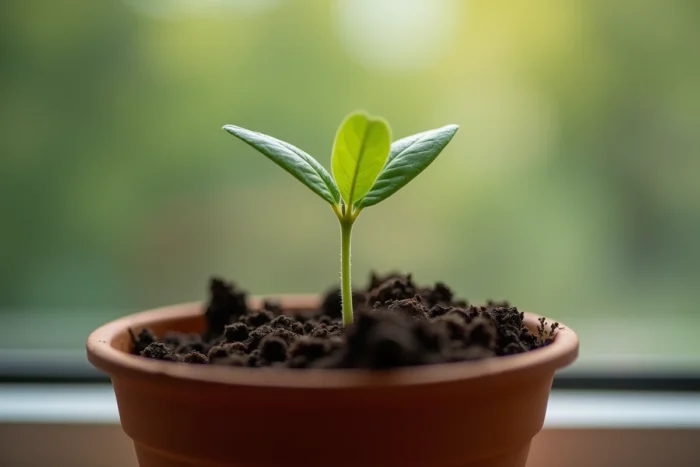
Once the sprout appears (after refrigerator stratification) or in the following spring (after fall sowing), the seedling needs specific conditions to thrive.
Repot the germinated pit in a deep pot filled with a mix of potting soil and sand. Drainage is the top priority: the apricot tree hates standing water. A pot with holes in the bottom, with a layer of clay pebbles or gravel, prevents the young roots from rotting.
Place the pot in full sun. The apricot tree is a Mediterranean tree that requires maximum light to develop properly. Water regularly but without excess: the substrate should dry on the surface between waterings.
In the first year, keep the plant in a pot to protect it from late frosts. Apricot trees are among the fruit trees most sensitive to spring weather fluctuations: a late frost on a young plant can destroy the buds and delay growth.
Waiting for the First Apricot Harvest
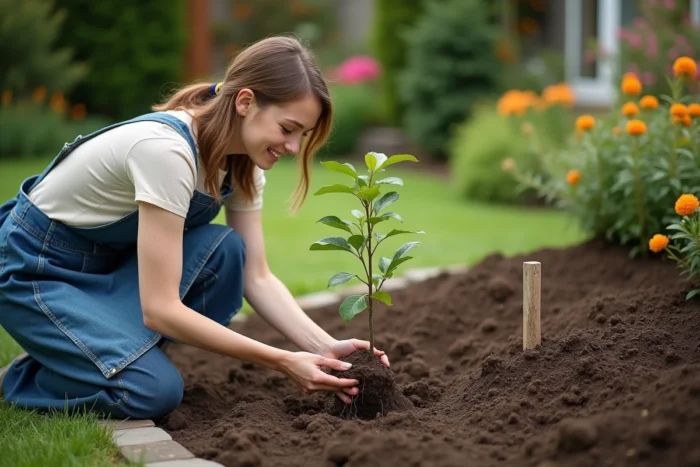
A seed-grown apricot tree takes significantly longer to produce its first fruits than a grafted tree. Patience is measured in years, not months.
A grafted apricot tree on a vigorous rootstock can bear fruit as early as its third year under good conditions. A seed-grown tree generally takes much longer, sometimes twice as long, and some trees never produce satisfactory fruits.
The climate plays a decisive role. Cold or wet springs delay fruiting, sometimes by an additional year, even on a well-managed tree. If you grow an apricot tree in a humid temperate climate, the harvests will be more unpredictable than in the south.
- Lightly prune the tree starting in its third year to encourage branching and future fruiting.
- Apply organic fertilizer at the base of the tree every late winter to support flowering.
- Protect early flowering with a winter cover if frosts are forecasted: the apricot flower is particularly fragile.
Grafting a branch from a known variety onto your seed-grown apricot tree remains an option to ensure reliable production while retaining the rootstock you have grown. The seed provides the root system, the graft guarantees the quality of the fruit.
Growing an apricot tree from an apricot pit remains one of the most accessible gardening experiences. The real selection filter is not the germination technique, but the patience to face the seasons and the acceptance that the fruit obtained will be a surprise.