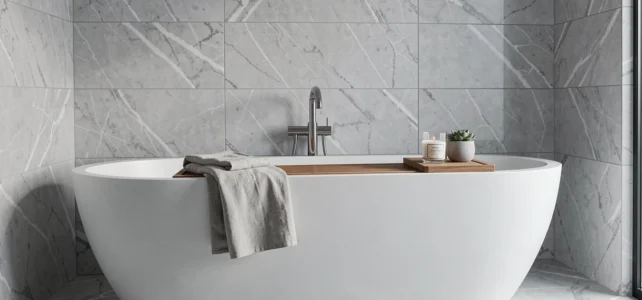
A standard bathtub often measures between 70 and 75 cm in width. This size is suitable for many bathrooms, but it imposes a cramped posture once a certain build is exceeded. Choosing a wide bathtub means gaining several centimeters that radically change the feeling of immersion and relaxation.
Bathtub rim and ergonomics: what width really changes
Have you ever noticed that in a narrow bathtub, your elbows touch the walls? This constant contact prevents relaxation. The body remains slightly tense, the shoulders rise, and the bath loses some of its relaxing effect.
With a wider tub (starting from about 80 cm), the arms find a natural position along the body or on the edges. The knees no longer have to be pulled up to the chest. The bathing posture becomes truly relaxed, which is no small detail for tall or larger individuals.
Ergonomics is not limited to raw width. The interior shape of the tub also plays a role: a flat and wide bottom allows for comfortable seating, while a rounded bottom concentrates space in the center. Therefore, before purchasing, it is useful to choose a wide bathtub by comparing the actual interior width, not just the overall dimension indicated by the manufacturer.

Wide bathtub and water consumption: a trade-off to know
A more generous tub consumes more water per fill. The difference is not negligible: moving from a width of 70 cm to 85 cm significantly increases the volume needed to reach a proper bath level.
Several levers can help limit this impact:
- Reduce the frequency of full baths and alternate with half-height baths, which are sufficient to relax the lower back and legs.
- Install a thermostatic mixer that reaches the right temperature without wasting cold water during heating.
- Choose a model with an adjustable overflow, allowing for a higher fill without overflow.
One bath per week in a wide bathtub consumes less than a daily bath in a narrow model. The issue is more about the frequency of use than the size of the tub itself.
Floor space and installation constraints in the bathroom
Gaining width in a bathtub means losing floor space. In a modestly sized room, every centimeter counts, and a model that is 85 or 90 cm wide can make movement difficult.
Clearance distances to consider
For a bathroom to remain functional, a clear passage of at least 60 cm in front of the bathtub must be maintained. This distance allows for drying off, placing a foot on a mat, and moving around without obstruction. Below this, daily use becomes frustrating.
Measuring the available space before choosing the width seems obvious, but many renovation projects forget to include the thickness of the apron or casing in the calculation. An apron often adds a few centimeters on each side, which can disrupt a layout plan.
Alternative shapes for constrained spaces
If the bathroom is too narrow for a wide rectangular bathtub, the asymmetrical bathtub offers an interesting compromise. Wider at the head and narrower at the feet, it frees up space around the faucet while providing generous shoulder space.
The corner bathtub, on the other hand, utilizes a corner that is often wasted. Its diagonal width exceeds that of a classic straight model, providing a sense of space without encroaching on the main circulation area.

Wide bathtub materials: weight and floor resistance
A wider bathtub is heavier, especially once filled with water. The total weight (tub, water, user) can reach high values, and not all floors are designed to support them.
Enamelled cast iron remains the heaviest material. A wide cast iron bathtub can weigh more than double that of an acrylic model of the same size. On upper floors, this difference is significant: checking the load-bearing capacity of the floor is a technical step not to be overlooked, especially in older buildings where joists may be undersized compared to current standards.
Reinforced acrylic and Solid Surface (composite resin) offer a good compromise. Their weight remains moderate, their surface is warm to the touch (unlike enamelled steel which cools quickly), and they come in generous widths without excessively burdening the structure.
Wide bathtub and accessibility: an underestimated asset
PMR (people with reduced mobility) regulations clearly favor walk-in showers, with a minimum surface of 120 by 90 cm for housing subject to accessibility standards. The bathtub, even wide, remains marginalized in these regulatory projects.
However, in a non-regulatory setting (individual home, primary residence without PMR obligation), a wide bathtub facilitates transfers and the installation of grab bars. The extra space allows for the placement of a bath seat or a lift without being cramped between the walls.
Seniors who wish to keep bathing rather than switch to showering find in wide models a safer option. The more accessible rim, combined with a non-slip bottom, reduces the risk of slipping when entering and exiting.
Choosing a wider bathtub ultimately meets a real need for physical comfort, not just an aesthetic desire. Width determines posture, muscle relaxation, and safety of use. It remains to check that the room, the floor, and the water budget are suitable, three concrete points that deserve to be addressed before any order.